Dining room rugs have to do more than look right beneath the table. They need enough room for chairs to slide out comfortably, a pile that doesn't fight the chair legs, and a construction that can handle the occasional spill.
At Landry & Arcari, our collection includes flatweaves and low-pile hand-knotted wool pieces for dining spaces. We've been sourcing rugs directly from master weavers since 1938, so you’ll find one-of-a-kind tribal and traditional rugs, along with vintage and antique pieces featuring time-worn patterns that hide a little wear.
Explore rugs for dining room settings below or visit one of our showrooms in Salem, Boston, and Framingham. If you're between standard sizes or unsure how much clearance your table needs, our rug specialist can help you work it out.
How to Size a Rug for a Dining Table
The table determines the rug size, but the chairs determine if you've got it right. Here’s an easy way to get started:
The 24 to 30 Inch Rule
Dining room rugs for under table use should extend 24 to 30 inches beyond the table on every side. That gives chairs enough room to slide out while keeping all four legs on the rug. A rug that stops short leaves the back legs catching on the edge every time someone leans back, which is hard on the chair and the rug's binding.
To find your minimum size, measure the table at its largest everyday size, especially if you regularly use extension leaves, and then add 48 to 60 inches to both the length and the width. A 40 by 72 inch table needs a rug of at least 88 by 120 inches, which puts it in the 8x10 range.
Dining room area rugs in open-plan spaces follow the same rule.
Rug Sizes by Table Size
Most rectangular dining tables land in one of three rug sizes. A six-seat table, usually 36 to 42 inches wide and 60 to 72 inches long, fits an 8x10 rug, while an eight-seat table around 84 to 96 inches long needs a 9x12 rug. A ten-seat table may call for a 10x14 rug, depending on the table's dimensions, chair size, and surrounding furniture.
These aren't rigid rules. A six-seat table with substantial armchairs may need more clearance than a compact table with narrow side chairs. Likewise, a dining room with a sideboard or other fixed furniture may call for a different proportion.
If you're weighing dining room rugs 8x10 against 9x12 for a six-seat table, it's worth going larger when the room allows.
Round Rugs for Round Dining Tables
Round rugs for dining room tables follow the same clearance rule, measured from the table's edge outward.
An 8-foot round rug suits a 48-inch round table, which leaves the 24 inches of clearance a pulled-out chair needs. A 9-foot round handles a 54- to 60-inch table, and a pedestal base gives you a little more forgiveness than four legs because the chairs never compete with a corner.
Rectangular dining room rugs for under table placement follow the same math. Rather than creating a precise border around the tabletop, the rug should give the chairs enough runway to move naturally.
If a round rug for dining room isn't on the grid, a square rug of the same width works just as well, and our specialists can look through the wider inventory or discuss a custom size.
Choosing the Best Rugs for Dining Room Use
The best dining room rugs balance construction, pile height, color, and pattern. In a dining room, chairs move across the rug, crumbs find their way into the weave, and sooner or later somebody will knock over a glass. The right construction makes those everyday realities easier to manage.
Flatweave and Low-Pile Wool
Flatweave rugs are particularly practical beneath dining tables because they have little or no pile to interfere with chair movement. A chair can slide across the surface without catching on a thick edge, and the low profile makes routine vacuuming straightforward
Wool is naturally more stain-resistant than most fibers, and most food spills blot out with water if you tend to them quickly. Our flatweave rugs include kilims and dhurries, many with a reversible design that works well in rooms where furniture moves frequently.
Patterns and Colors That Hide Wear
Dining rooms benefit from rugs with enough visual variation to disguise the small marks that come with regular use. Mid-tone grounds and layered colors such as reds, blues, rust, or brown are often more forgiving than ivory or cream.
That doesn't mean the rug has to be busy. A restrained geometric can add structure beneath a simple dining table, while a floral design can soften a room filled with straight lines.
Our floral rugs range from formal Persian-inspired compositions to more relaxed botanical designs. Antique and vintage pieces add texture and color variation that give the room character without relying on a perfectly coordinated scheme.
Caring for a Dining Room Rug
Dining room area rugs need routine care, particularly when the table gets regular use.
-
Spills: Vacuum with suction rather than a beater bar and blot spills immediately without rubbing.
-
Rug pad: A rug pad is also worthwhile beneath a dining table. It helps keep the rug stable, provides a little cushioning, and reduces movement as chairs slide across the surface.
-
Cleaning: Since hand-knotted wool rugs and antique pieces require professional care, Landry & Arcari provides in-house cleaning and restoration services in Massachusetts to preserve rug appearance over time.
Dining Room Rug FAQs
What kind of rug is best for a dining room?
Flatweave and low-pile wool rugs are practical choices for a dining room because chairs can move easily across their lower profile. Wool also offers a durable natural fiber, while flatweaves are straightforward to vacuum and maintain. Avoid high-pile rugs and delicate silk, which crush and stain under daily meals.
What is the best type of rug to use under a dining table?
Choose a flatweave or low-pile rug that extends 24 to 30 inches beyond the table on every side. That clearance keeps the chair legs on the rug when guests pull their chairs out. Size matters as much as construction, so measure the table, add 48 to 60 inches to each dimension, and our showroom team can match a piece to it.
What is the standard size for dining room rugs?
There isn't one standard size for every dining room rug. An 8x10 rug commonly suits a six-seat rectangular table, while a 9x12 dining room rug works well for many eight-seat arrangements. Larger tables may need 10x14 or another oversized dimension. Measure the table at its full length before choosing the rug.
Should you put a rug in a dining room?
Yes. A rug can define the dining area, soften the room, and add color and texture beneath the table. The trade-off is that it has to handle food and chair traffic, which is why material matters more than in any other room.
What color should a dining room rug be?
There isn't one right color, but patterned or mid-tone rugs tend to be more forgiving of crumbs, small marks, and everyday wear than very pale solid rugs. Look at the colors already present in the dining room, including the table, chairs, walls, and artwork, then choose a rug that relates to them without matching everything exactly.
What size rug fits a round dining table?
An 8-foot round rug works well with a 48-inch round table, while a 9-foot round fits a 54- to 60-inch table, keeping 24 to 30 inches of rug beyond the edge. A square rug of the same width works just as well and is often easier to find among handwoven pieces.
 Showrooms


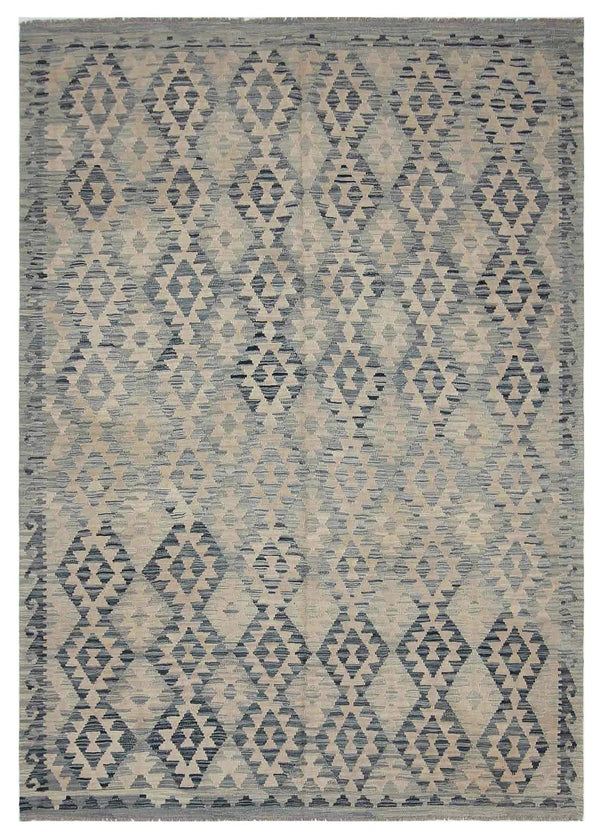 Uzbek Kilim Handwoven Tribal Rug, J80132 $1,400.00
 Honeycomb Handwoven Tribal Rug, J80286 $5,100.00
 Madras 1359 Handwoven Contemporary Rug, J79999 $2,450.00
 Moroccan Handwoven Tribal Rug, J78318 $6,100.00
 Antique Kerman Handwoven Traditional Rug, J78970 $7,500.00
 Serapi Handwoven Tribal Rug, J79850 $6,400.00
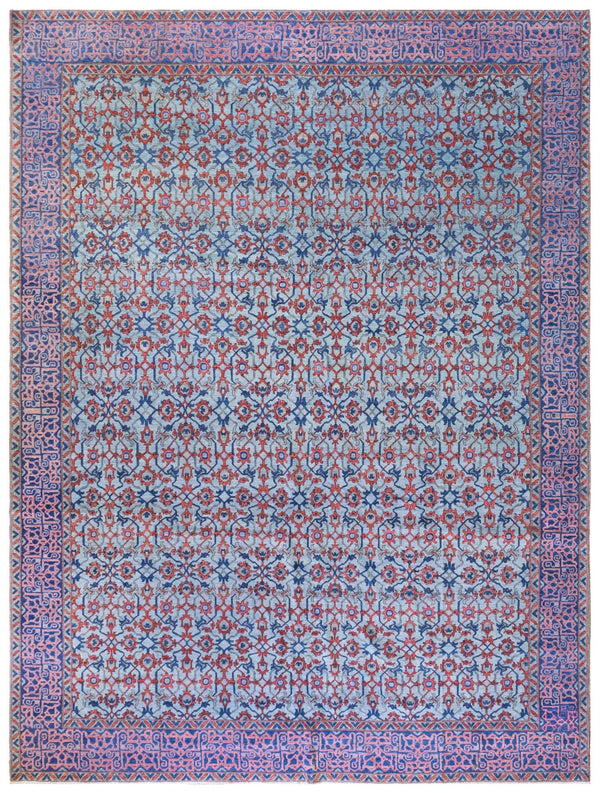 Lotto Handwoven Tribal Rug, J79963 $26,500.00
 Konya Handwoven Transitional Rug, J78120 $6,250.00
 Antique Kerman Handwoven Traditional Rug, J78691 $16,500.00
 Sold out Antique Lavar Kerman Handwoven Traditional Rug, 82636 $22,500.00
 Khotan Handwoven Traditional Rug, J74855 $5,800.00
 Antique Bijar Handwoven Tribal Rug, J76422 $27,500.00
 Erased Serapi Handwoven Transitional Rug, J75772 $5,000.00
 Arabesque Handwoven Tribal Rug, J74895 $13,500.00
 Ferahan Handwoven Transitional Rug, J75765 $3,300.00
 Baku Handwoven Transitional Rug, J75705 $3,300.00
 Antique Mahajaran Sarouk Handwoven Traditional Rug, J75011 $45,000.00
 Antique Bakhtiari Handwoven Tribal Rug, J73860 $25,000.00
 Arabesque Handwoven Traditional Rug, J72760 $5,900.00
 Khotan Vase Handwoven Transitional Rug, J71381 $3,050.00
 Classical Oushak Handwoven Transitional Rug, J71087 $13,500.00
 Khotan Vase Handwoven Traditional Rug, J70500 $8,900.00
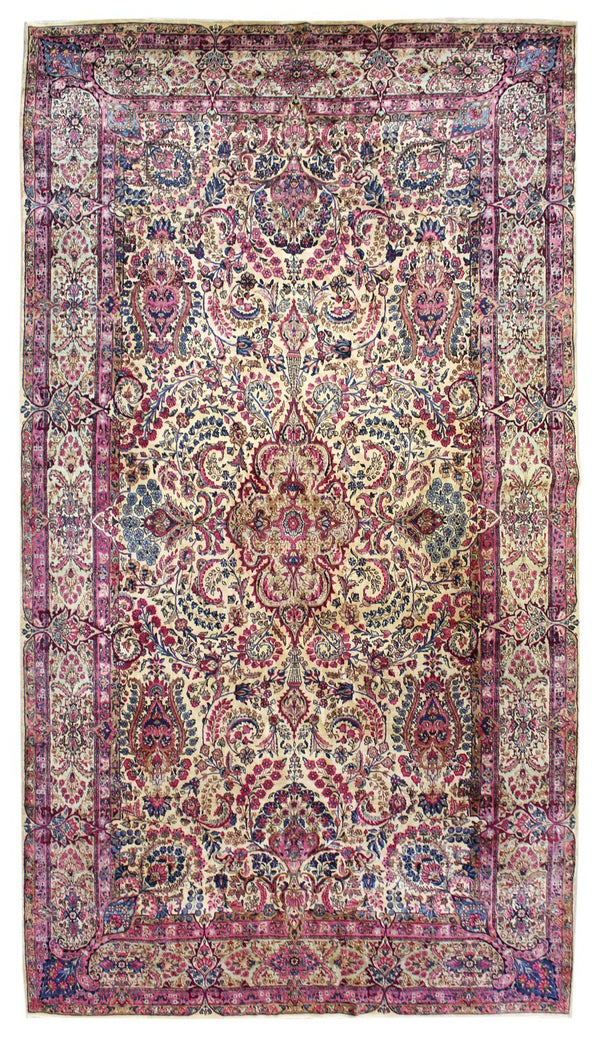 Antique Lavar Kerman Handwoven Traditional Rug, JF8137 $9,500.00
 Erased Oushak Handwoven Transitional Rug, J64137 $5,400.00


